7 Home Library Ideas That Actually Work in Small Spaces
There’s something about the smell of old paper and the quiet weight of a book in your hands. But when your square footage is tight, the dream of a home library can feel like a luxury you don’t have room for. I’ve been there—staring at a stack of books on the floor, wondering where they could possibly live. The good news is a real, functional home library doesn’t require a separate room. It just requires a little clever thinking. Here are seven ideas that actually work in small spaces.

1. Go Vertical with Floor-to-Ceiling Shelving
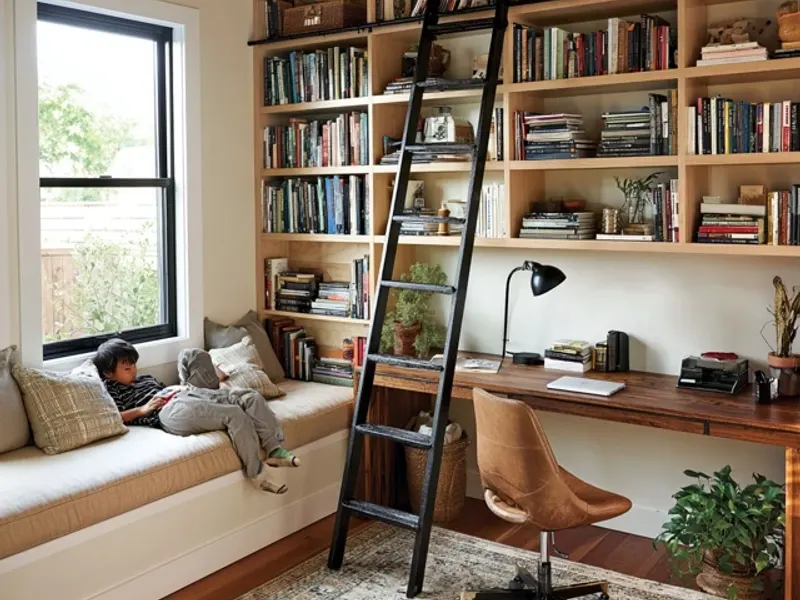
When floor space is scarce, the only way to go is up. Floor-to-ceiling bookshelves make use of every inch of wall height, and they draw the eye upward, making the room feel larger. I like to use adjustable shelving so I can fit everything from a tall art book to a slim paperback. A common mistake is leaving too much empty space at the top—fill those upper shelves with books you don’t reach for daily, or decorative bins for hidden storage. If you’re renting, consider a tall, freestanding bookcase that anchors to the wall for safety.
2. Turn a Corner into a Reading Nook
Every room has a corner that goes unused. That’s prime real estate for a cozy reading nook. Place a small armchair or a cushioned floor seat in the corner, add a floor lamp with a warm bulb, and install a couple of floating shelves above for your current reads. The trick is to keep it intentional—a small rug under the chair defines the space. I always keep a small basket nearby for books I’m actively reading, so the nook stays tidy.
3. Use Multi-Functional Furniture
In a small space, every piece of furniture should earn its keep. A bench with built-in bookshelves underneath works as seating and storage. A console table behind a sofa can hold books and act as a display surface. I’ve even seen a narrow bookshelf used as a room divider in a studio apartment—books on one side, a desk on the other. The key is to measure twice before buying. A piece that’s too deep will make the room feel cramped.
4. Create a Gallery Wall of Books
Instead of traditional shelves, arrange your books on a wall as part of a gallery. Use a mix of floating shelves at different heights, and intersperse books with small art prints, a plant, or a framed photo. This approach turns your collection into decor. I prefer to group books by color for a cohesive look, but you can also arrange them by size. The important thing is to leave some negative space—don’t cram every shelf full. That visual breathing room keeps the wall from feeling cluttered.
5. Maximize the Space Under a Window
If you have a window, especially one with a deep sill, you have a built-in reading spot. Install a low bookshelf under the window and top it with a cushion. Now you have a window seat with storage underneath. The natural light is perfect for daytime reading, and you can add a small side table for a cup of tea. Just be mindful of direct sunlight on book spines—it can fade covers over time. A simple curtain or UV-filtering film can help.
6. Use Baskets and Bins for Hidden Storage
Not every book needs to be on display. For paperbacks, magazines, or children’s books, use woven baskets or fabric bins on lower shelves. They hide visual clutter and make it easy to swap out a stack of books seasonally. I use labels on the bins so I know what’s inside without pulling everything out. This is especially useful if you have a mix of genres or if you’re storing books that are less visually appealing.
7. Install Shelves in Unexpected Places
Look around your home for unused wall space. Above door frames, along a hallway, or even inside a closet door. A narrow shelf above a doorway can hold a row of favorite books. A hallway bookshelf becomes a conversation piece. I once installed a slim shelf along the back of a bathroom door—it held a few magazines and a small candle. The trick is to keep these shelves shallow (6-8 inches deep) so they don’t protrude into walkways.
A Quick Note on Safety
Any tall or wall-mounted shelving should be securely anchored to the wall, especially if you have children or pets. Use proper wall anchors for drywall, and check that the shelf brackets are rated for the weight of your books. A falling bookcase is dangerous and can damage your collection. Take the extra ten minutes to do it right.
Takeaway
A small space doesn’t mean you have to give up on a home library. It just means you need to think differently about where and how you store your books. Start with one wall or one corner, and build from there. The best home library is the one that makes you want to sit down and read.
Frequently Asked Questions
How do I create a home library in a small space without taking up too much floor area?
Use vertical space with wall-mounted shelves or tall bookcases. Consider a corner reading nook with a small chair and a floor lamp. Multi-use furniture like a bookshelf that doubles as a room divider or a storage ottoman can also help.
What are the best types of shelves for a small home library?
Wall-mounted floating shelves are great for small spaces because they don't take up floor space. Ladder shelves are also good as they lean against the wall and have a small footprint. Corner shelves utilize dead space.
How can I make a small home library feel cozy?
Layer soft lighting with a warm-toned lamp or string lights. Add a comfortable chair or floor cushions. Use warm wood tones for shelves and incorporate textiles like a throw blanket or a small rug. Keep the color palette calm and cohesive.
Can I have a home library in a studio apartment?
Absolutely. Use a tall, narrow bookcase against one wall. Consider a bookshelf that also serves as a room divider. A reading nook can be created in a corner with a floor lamp and a comfortable chair. Use baskets or bins on lower shelves for hidden storage.
How do I organize books in a small library to make it look good?
Group books by color for a visually striking effect, or by size for a clean, uniform look. Leave some space for decorative objects like small plants or framed photos. Use bookends to keep rows tidy. Consider storing some books horizontally to break up vertical lines.