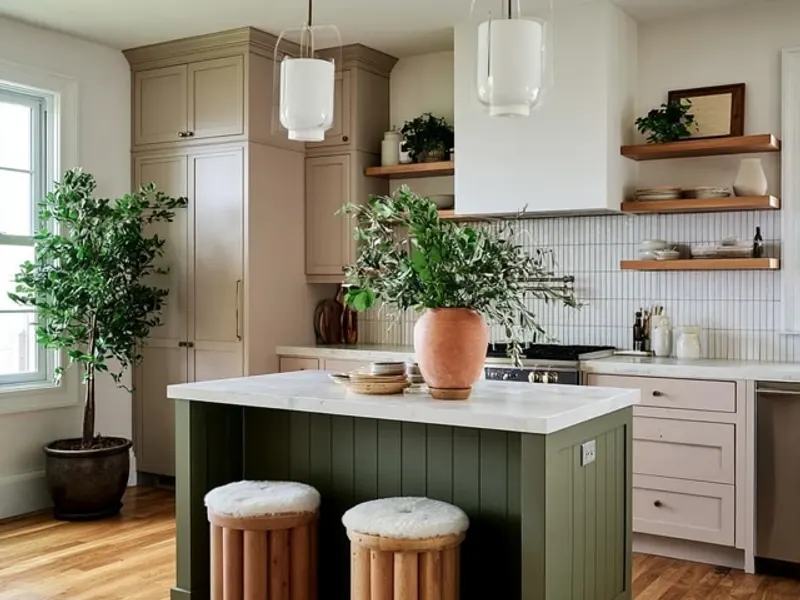
7 Kitchen Island Ideas for Small Kitchens That Actually Work
The first time I squeezed a rolling cart into my narrow galley kitchen, I felt the space exhale. Suddenly, my cutting board had a home, my spices stood at attention, and the countertops breathed again. A kitchen island in a small space isn't about size—it's about fit. After years of experimenting with layouts and storage in tight corners, I've landed on seven designs that genuinely work. No fantasy. Just real solutions for real kitchens.

1. The Rolling Butcher Block Cart
A butcher block cart on casters gives you a sturdy work surface that moves where you need it. Look for one with a thick hardwood top—at least 1.5 inches—so it can handle chopping without wobbling. Lock two casters to keep it steady when you're working. The common mistake? Buying a cart with all four casters unlocked. That thing will drift across the floor like a shopping cart in a parking lot. Lock the front pair. For extra stability, place a thin rubber mat underneath when it's parked.
Why it works: The open base lets you slide it over a rug or flush against a wall when not in use. Use the lower shelf for heavy items like a stand mixer or stack of cutting boards. In a tent camping context, this is the same principle as a portable camp kitchen table—flexible, sturdy, and easy to stow.
2. The Narrow Prep Table with Drop-Leaf Sides
A drop-leaf table, 18 inches wide, can tuck against a wall or into a corner. When you need extra prep space, flip up one or both leaves. I've used a vintage drop-leaf table with a sealed oak top for years. The leaves add 12 inches each, giving you a 42-inch-long island when fully open. The trick is to choose a table with locking hinges so the leaves stay level under weight. Without locks, they'll sag under a heavy cutting board or a hot pot.
Adapt for kids: Use the lower shelf for kid-safe dishes or snacks. In a small kitchen, every inch counts—and a drop-leaf gives you room only when you need it.
3. The Two-Tier Cart with Hanging Hooks
A stainless steel or bamboo cart with two tiers and side hooks is a workhorse. The top tier holds your prep items—cutting board, knife block, salt and pepper. The bottom tier stores pots, pans, or a small trash bin. The hooks on the sides hold dish towels, measuring cups, or even a small cast-iron skillet. I prefer bamboo for its warmth and lighter weight. Stainless steel is easier to clean but can feel cold in a cozy kitchen.
Common mistake: Overloading the bottom tier. Keep it to items you use daily. Stacking too many heavy pots makes the cart top-heavy and hard to roll. A tip from my camping days: pack only what you need for the meal at hand, not the entire kitchen.
4. The Fold-Down Wall-Mounted Island
If floor space is truly at a premium, mount a fold-down table to the wall. Use heavy-duty folding brackets rated for at least 50 pounds. A solid wood slab, 24 inches deep and 36 inches wide, gives you a real island when it's down. When you're done, fold it flat against the wall. The key is to install it at counter height (36 inches) and leave a clear area underneath for a stool or your legs.
Why it works: It disappears when you don't need it. Perfect for a tiny kitchen where a rolling cart would block traffic. Add a magnetic strip on the wall above for knives or spice tins—keeps them accessible without taking up surface space.
5. The Repurposed Dresser or Sideboard
A low dresser or sideboard, 30 to 34 inches high, can become a kitchen island with a bit of work. Remove the top drawers if they're shallow, and add a butcher block or marble slab on top. The remaining drawers hold utensils, linens, or small appliances. The lower cabinet space stores larger pots. The trick is to seal the top thoroughly with food-safe mineral oil or polyurethane—especially if you plan to prep food on it.
Safety note: Make sure the piece is stable. If it wobbles, add furniture levelers or anti-slip pads under the feet. In a small kitchen, a wobbly island is a hazard when you're carrying hot pans.
6. The Slim Cart with a Towel Bar and Knife Block
A cart just 12 to 15 inches wide can still be incredibly functional. Look for one with a built-in towel bar on the side and a narrow slot for knives or utensils. The top surface is small—perfect for a coffee station or a single cutting board. Use the lower shelf for a small trash bin or a stack of plates. The narrow profile means it fits in gaps most islands can't.
Adapt for heat: If you place it near the stove, choose a cart with a stainless steel top—it won't warp or discolor from heat. Keep a trivet handy for hot pots.
7. The Mobile Kitchen Island with a Built-In Cutting Board
Some rolling islands come with a pull-out cutting board or a drop-down leaf that extends the work surface. This is my favorite for small kitchens because it gives you an extra 12 to 18 inches of prep space without taking up permanent floor area. The cutting board slides out over the top of a drawer or shelf, so it's always ready but never in the way.
Common mistake: Forgetting to measure the clearance for the pull-out board. Make sure it clears cabinet handles or walls on both sides. I once bought a cart where the board hit the fridge handle—lesson learned. Measure twice, buy once.
Takeaway: Your Small Kitchen Island Should Serve You, Not the Other Way Around
A kitchen island in a small space is about deliberate choices. Every inch should earn its keep. Start with one of these seven ideas, measure your space carefully, and think about how you actually cook. Do you need more prep space? More storage? A place to set down a hot pan? Let your workflow guide the design. And remember—you can always swap out a cart or add hooks later. The best island is the one that makes your kitchen feel bigger, not smaller.
Frequently Asked Questions
What is the best size for a kitchen island in a small kitchen?
Aim for a width of 24 to 30 inches and a length of 36 to 48 inches. Leave at least 36 inches of clearance on all sides for comfortable movement and opening appliances.
Can I add a kitchen island to a galley kitchen?
Yes, but use a narrow rolling cart or a fold-down table that tucks away. A width of 18 to 24 inches works well, and choose a model with locking casters for stability.
How do I get more storage from a small kitchen island?
Look for islands with open shelving, drawers, or a bottom tier. Use baskets or bins on shelves to corral small items. Hooks on the sides add hanging storage for towels or utensils.
What is the most versatile kitchen island material?
Butcher block is warm, durable, and can double as a cutting board. Stainless steel is easy to clean and modern. For budget, a repurposed wooden table with a sealed top works beautifully.
Should a small kitchen island have seating?
Only if you have at least 15 inches of overhang for knee clearance and the island is wide enough (24 inches minimum). Otherwise, skip seating to keep the island slim and functional.