
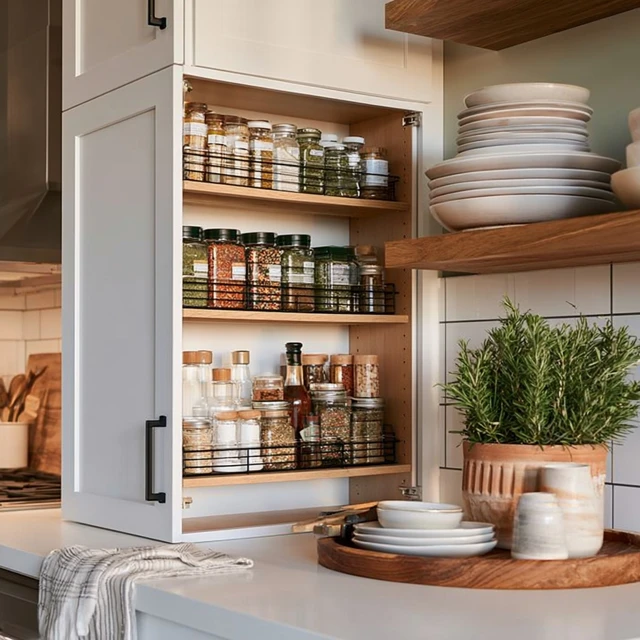
I once spent ten minutes digging through a crumpled plastic bag of spice packets, only to find the cumin had leaked all over the oregano. The bag was sticky, the labels were gone, and the whole thing smelled like a curry explosion. That was the day I decided spice cabinet organization for camping wasn’t optional—it was survival.

The trick everyone’s saving right now isn’t complicated. It’s not about buying a fancy rack or dedicating a whole drawer. It’s about three things: the right containers, a system that doesn’t rely on gravity, and a place to put it all that doesn’t slide off the table.
Start with the Containers
Square or rectangular containers are the foundation. Round jars roll. They roll off the table, under the cooler, and into the dirt. Square ones stack and stay put. I use small 2-ounce clear plastic jars with flip-top lids or screw tops. The clear plastic lets me see what’s inside without opening them. That matters when you’re cooking in low light or rain.
Size matters, too. A 2-ounce jar holds enough for a long weekend for a family of four. For a solo trip, 1-ounce jars work. Don’t go bigger than 4 ounces unless you’re feeding a crowd. Spices lose potency in the heat and humidity of a tent, so carry only what you’ll use.
One specific trick I learned the hard way: label the top and one side. When the jars are stacked, you can see the top label. When they’re lined up in a bin, you see the side. Use a permanent marker on matte tape or write directly on the plastic with a grease pencil. Paper labels peel off in damp conditions.
The Container and the System
Don’t just toss the jars loose in a bin. They’ll rattle, shift, and eventually spill. Instead, use a shallow plastic bin with a lid—about 6 inches deep and wide enough to hold your jars in a single layer. A divided bin (like a small tackle box or a craft organizer) works even better. Each compartment keeps one spice in its place.
Another method I use for longer trips: a mesh bag with a drawstring. Fill it with labeled jars, pull the cord tight, and hang it from a tent pole or a tree branch. A small bungee cord wrapped around the bag and the pole stops it from swinging in the wind. This keeps the spices off the table, frees up counter space, and makes it easy to grab what you need.
The common mistake to avoid: putting all your spices in one large container without dividers. Every time you open it, the jars shift. Eventually, a lid pops off. Then you have paprika mixed with garlic powder, and your scrambled eggs taste like a mystery.
Adapting for Weather and Terrain
Rain changes everything. If you’re using a bin, keep the lid on between uses. If you’re using a hanging bag, make sure it’s under a tarp or the rainfly. Moisture gets into plastic containers through the threads of the lid. A tiny piece of plastic wrap under the lid before screwing it shut adds a waterproof seal.
Wind is another enemy. A gust can knock over a bin or send a bag swinging. On a windy site, I place the spice bin inside a larger, heavier tote or wedge it between two coolers. For the hanging method, I use a carabiner to clip the bag to the tent’s gear loft loop instead of a pole—less swing.
Cold weather doesn’t affect the spices themselves, but it makes the containers brittle. If you’re camping below freezing, use plastic jars, not glass. Plastic flexes. Glass cracks.
Camping with Kids and Keeping It Tidy
Kids grab. They grab the wrong jar, open it, spill it, or lose the lid. I solved this by giving each child their own small, labeled container of a single spice they’re allowed to use—usually salt or a mild seasoning blend. The rest stay in a bin with a child-proof latch or a bag tied high. This keeps the chaos contained and teaches them to be careful with one thing at a time.
For family trips, I also pre-mix a few blends: taco seasoning, campfire chili powder, breakfast scramble mix. These go in larger jars with a clear label. That way, I reach for one jar instead of four when I’m cooking with kids underfoot.
Safety Note on Stoves and Heat
Spices are flammable in powder form. Keep them away from the direct flame of a camp stove or a campfire. Store them at least a foot away from the burner. If you’re using a hanging bag, don’t hang it directly above the stove. A sudden flare-up could ignite the bag or the contents.
Also, never store spices inside a tent that’s being heated with a propane heater or a lantern. The heat and fumes can degrade the spices and create a fire risk. Keep them in the kitchen area or a separate dry bag.
A Simple Takeaway
Good spice cabinet organization for camping boils down to three things: square containers, a bin or bag that holds them still, and labels you can read in any light. It’s not glamorous, but it makes cooking at camp faster, cleaner, and a lot less frustrating. Next time you pack, take ten minutes to set this up. Your future self—standing over a stove in the rain—will thank you.
Frequently Asked Questions
What is the best way to organize spices for tent camping?
Use small, clear, square or rectangular containers with airtight lids. Arrange them in a shallow, divided bin or a mesh bag. Stackable shapes save space and prevent rolling. Label the tops and one side so you can see them from above or the front.
How do I keep spice containers from spilling in the car?
Pack the bin or bag last, and wedge it between soft items like towels or sleeping bags. Alternatively, use a small plastic container with a tight lid and fill any empty space with a dish towel or paper towels to block movement.
Can I use glass jars for camping spices?
Glass works but is heavier and breakable. If you choose glass, wrap each jar in a cloth or use a padded case. Plastic or silicone containers are lighter and more durable for rough roads and drops.
How do I label spices so they don’t wash off?
Use a permanent marker on matte tape or write directly on the container with a grease pencil. For clear plastic, write on a piece of painter’s tape and stick it on. Avoid paper labels that get wet and peel.