
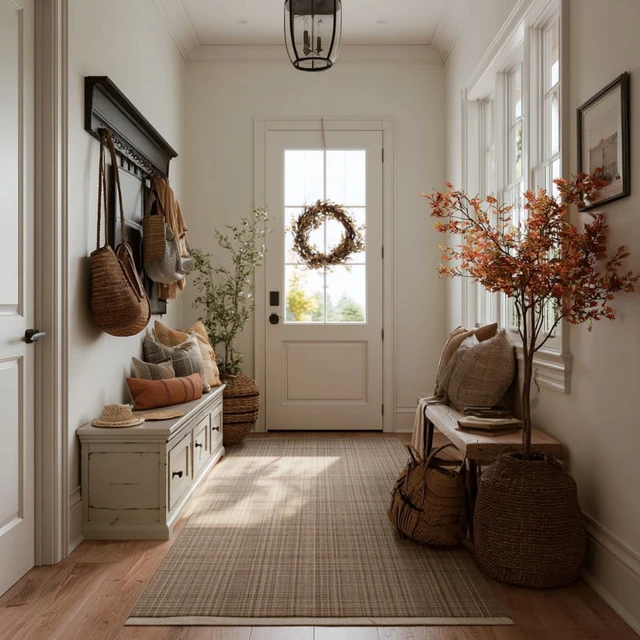
The first thing you see when you unzip the tent is the hallway. It’s the mud room, the shoe drop, the gear catch-all. And if you’re like me, you want it to feel like a real entryway — not a pile of boots and snack wrappers. But you don’t need fancy organizers or a big budget. With a few household items and smart placement, you can build a hallway that works for rain, dirt, kids, and late-night bathroom trips. Here’s exactly how, step by step.

Step 1: Define the Floor Zone
Start with the ground. In a tent, the floor is your first line of defense against mud, pine needles, and condensation. I use a cheap indoor/outdoor doormat — the kind you’d put on a real porch. It should be about 18 by 30 inches, big enough for two pairs of boots side by side. Place it just inside the door, parallel to the tent wall. This catches the worst of the dirt and gives you a clear spot to sit and take off shoes. If you’re on grass or bare ground, put a tarp under the tent floor first. Then lay the mat on top. For rainy trips, I flip a second mat upside down outside the door to scrape mud off before stepping in. Common mistake: putting the mat too far from the door. Keep it within arm’s reach of the zipper so you can step onto it immediately.
Step 2: Create a Vertical Drop Zone
The hallway walls are prime real estate. A hanging shoe organizer — the kind with clear plastic pockets — works perfectly. Hang it from a tent pole using a bungee cord or a carabiner. Each pocket can hold one person’s essentials: a headlamp, a phone, a water bottle, a hat. For families with kids, assign a row per child. This keeps small items off the floor and easy to find in the dark. The trick is to hang it at waist height so kids can reach their own pockets. If you don’t have a shoe organizer, use a mesh laundry bag tied to the pole. Clip mini carabiners to the mesh loops for keys or a multi-tool. Avoid hanging heavy items like cast iron pans — they can pull the tent pole out of alignment in wind.
Step 3: Install a Low Shelf for Shoes
Nothing kills a hallway vibe faster than a pile of shoes. I take a flat plastic storage bin — about 12 by 18 inches and 6 inches deep — and slide it under the doormat. Yes, under the mat. The mat covers the bin, so shoes sit on top, but the bin catches any sand or pebbles that fall through. For a taller shelf, use a collapsible fabric cube turned on its side. Place it next to the door, and each family member gets one cube for shoes. In cold weather, line the cube with a towel so wet boots don’t soak the fabric. If you’re camping with a dog, put a small towel inside the cube for muddy paws. The key measurement: the shelf should be no taller than 12 inches so it doesn’t block the airflow near the tent floor. This prevents condensation buildup under the shelf.
Step 4: Add Soft, Low Light
A hallway needs light that doesn’t blind you at 2 a.m. I use a single battery-powered LED lantern with a warm setting (around 2700K color temperature). Place it on the floor next to the doormat, or hang it from a loop inside the tent at knee height. The light should glow upward, not straight into your eyes. To diffuse it, drape a thin bandana or a muslin cloth over the top. This turns a harsh beam into a soft, campfire-like glow. For kids, I put a small glow stick in a clear water bottle — it’s safe and easy to grab. Never use a propane lantern inside a tent, even with the door open. Carbon monoxide is invisible and deadly. Stick to battery power only.
Step 5: Set a Nighttime Navigation System
When nature calls at 3 a.m., you don’t want to fumble for a flashlight. I tie a small glow-in-the-dark zipper pull to the door’s zipper tab. That way, I can find the exit by feel. Then I lay a strip of reflective tape along the hallway floor edge — just a 12-inch piece — so a headlamp beam catches it instantly. For families with toddlers, I place a small basket with a nightlight inside near the door. The nightlight is a USB-powered puck that runs off a power bank. It stays on all night at a low setting. This also helps kids find their shoes without waking everyone up. The common mistake: placing the light too high. Keep everything below waist level so it’s in your natural line of sight when you’re half asleep.
Step 6: Build a Quick-Clean Mud Station
Rain and mud are inevitable. I keep a small plastic tub — about 8 by 10 inches — next to the doormat. Inside: a microfiber towel for drying wet shoes, a small trowel for scraping mud, and a zippered pouch with a spare pair of socks. When someone comes in with wet feet, they sit on the doormat, scrape off the mud with the trowel, wipe down with the towel, and change socks. The dirty socks go into a mesh bag clipped to the tent pole. This keeps the hallway dry and the sleeping area clean. In hot weather, swap the towel for a bandana and add a mini spray bottle of water for cooling feet. For sandy beaches, use a small dustpan and brush to sweep sand into the tub. Empty it outside before zipping up for the night.
Step 7: Personalize Without Clutter
The hallway should feel like yours, not a store display. I add one small decorative item that serves a purpose. A pinecone in a small bowl works as a natural air freshener. A piece of driftwood holds a carabiner with keys. A single sprig of lavender tied to the doormat smells good and repels some bugs. For kids, let them pick a small rock or a feather to place on the shelf. The rule: if it doesn’t have a job, it doesn’t stay. No knickknacks that will blow away or get lost. Keep everything within a 2-foot radius of the door. That’s your hallway footprint. Anything beyond that belongs in the sleeping or cooking zone.
Takeaway: Small Steps, Big Difference
A hallway doesn’t need to be expensive. It needs to be intentional. With a doormat, a hanging organizer, a low shelf, soft light, a nighttime marker, a mud station, and one personal touch, you turn a tent opening into a real entryway. The dirt stays out. The gear stays found. And every time you unzip, you feel a little more at home. That’s the kind of comfort that costs nothing but thought.
Frequently Asked Questions
How can I decorate a tent hallway on a tight budget?
Use items you already own: a bath mat for a doormat, a hanging shoe organizer for pockets, and a headlamp or battery lantern for soft light. Repurpose a small plastic bin as a catch-all for shoes.
What should I put in a tent hallway for kids?
Place a low bin for each child’s shoes and a hanging pocket organizer for their water bottles, hats, and small toys. Keep a mini lantern on the floor for nighttime visibility.
How do I keep dirt out of the tent hallway?
Lay a heavy-duty doormat or a piece of indoor/outdoor carpet just inside the door. Use a small trowel to scrape mud off boots before entering. Store shoes in a designated bin or on a mat.
Can I use a tent hallway for storage without buying anything?
Yes. Use a cardboard box covered with a dish towel as a shoe bin. Hang a mesh produce bag from the tent pole for small items. A folded blanket can serve as a soft floor mat.