
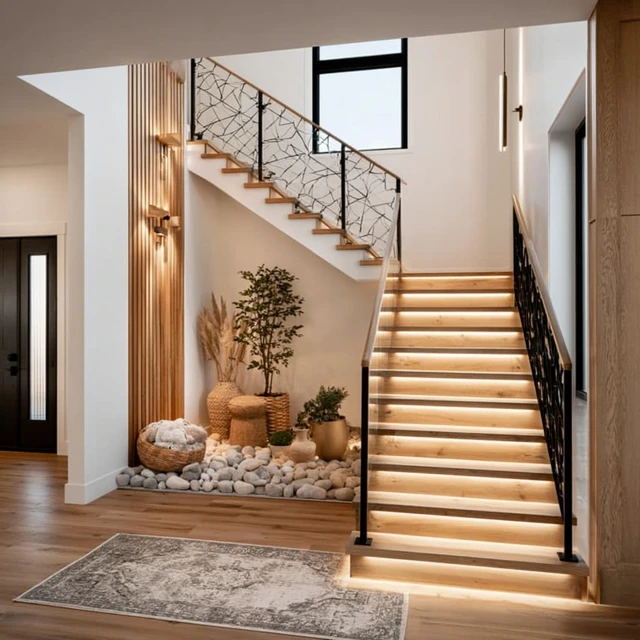
The first time I stood at the bottom of a narrow staircase, I felt the squeeze. The walls closed in, the treads felt tighter than they should, and any decor I tried just seemed to crowd the air. But over time, I learned that small staircases don’t need less—they need smarter. The trick is choosing pieces that respect the space while adding character. Here are seven ideas that actually work, tested in tight spots where every inch counts.

1. Wall-Mounted Slim Shelves
Forget bulky bookcases. A single floating shelf, no deeper than six inches, can hold a small plant, a candle, or a framed photo. Place it at eye level on the wall beside the stairs. The key is spacing: leave at least twelve inches between shelves to avoid a cluttered look. I use clear acrylic brackets to keep the shelf visually light. Common mistake: overloading. One or two items per shelf, max. In a tent camping context, this same principle applies—keep your gear shelves lean so your space breathes.
2. Painted Stair Risers
Risers are free real estate. A coat of paint in a soft gray, sage green, or even a muted mustard adds color without taking up any floor space. For a subtle pattern, use painter’s tape to create a simple geometric design—diamonds or stripes. The trick is to seal with a matte polyurethane so it holds up to foot traffic. Avoid dark colors on narrow stairs; they can make the space feel like a tunnel. Light hues reflect what little light you have.
3. A Single Narrow Runner
A runner doesn’t have to be wide. In fact, a runner that leaves two to three inches of bare tread on each side makes the stairs feel wider. Choose a low-pile wool or cotton blend—it won’t trip you up and it muffles footsteps. Secure it with carpet tape at every corner. Common mistake: using a runner with a busy pattern that overwhelms the space. Stick to subtle stripes or a solid with a textured weave. For camping, think of a runner like a tent footprint—it defines the area without stealing space.
4. Lean Art, Not Hung Art
Leaning a framed print or a small mirror against the wall on a landing or the bottom step adds depth without drilling holes. Use a frame with a wide bottom edge so it stays put. Keep the artwork small—no larger than sixteen by twenty inches—so it doesn’t dominate. The angle: let it rest at a slight backward tilt for stability. In a tent, I lean my lantern and a small pouch of essentials in a corner—same idea, different setting.
5. Staircase Basket Wall
Mount a row of small woven baskets on the wall beside the stairs. Use them to hold keys, mail, or tiny plants. Space them about eight inches apart vertically. The baskets add texture and warmth, and they keep clutter contained. Choose baskets with a flat back so they sit flush against the wall. Avoid anything too deep—two inches max. This is like using mesh bags for tent gear: contained, visible, and easy to grab.
6. Under-Stair Nook with a Single Chair
If your staircase has a small landing or an open area underneath, place a single slim chair—no arms, no ottoman. A wooden stool or a canvas camp chair works. Add a small floor lamp or a wall sconce. This creates a reading nook without turning the space into a furniture showroom. The rule: one piece of furniture only. Any more and the nook becomes a bottleneck. For tent camping, this mirrors the idea of a single camp chair by the tent entrance—functional, not crowded.
7. Vertical Gallery Wall
Instead of spreading art across the wall, stack three to five small frames in a vertical line. Use frames of the same color—black or natural wood—and keep the spacing even at three inches apart. This draws the eye upward, making the ceiling feel higher. Choose prints with light backgrounds to keep the wall from feeling heavy. Avoid frames with glass that reflects too much; matte finishes work better in tight spaces. This is like hanging a string of lights in a tent—vertical lines create a sense of height.
Takeaway
Small staircases don’t have to be bare. They just need decor that works with the space, not against it. Start with one idea—paint the risers or add a single shelf—and see how it feels. The goal is to make the stairs a part of your home, not a forgotten passage. And if you’re camping, the same thinking applies: every corner counts, so choose pieces that earn their place.
Frequently Asked Questions
How can I decorate a very narrow staircase without making it feel cramped?
Focus on vertical elements like wall-mounted shelves or slim art. Avoid bulky furniture. Use light colors on walls and risers to keep the space open. A single runner in a light tone can add warmth without visual weight.
What are the best materials for stair decor in small spaces?
Lightweight materials like canvas prints, thin metal frames, and slim wooden shelves work best. Avoid heavy glass or thick frames. For runners, choose low-pile wool or cotton that lies flat and won’t catch on shoes.
Can I add storage to my staircase without making it look cluttered?
Yes. Use a narrow console table on the landing or install floating shelves at the top or bottom. Keep items minimal—one or two baskets for keys and mail. Avoid overfilling shelves. Every item should serve a purpose or bring joy.