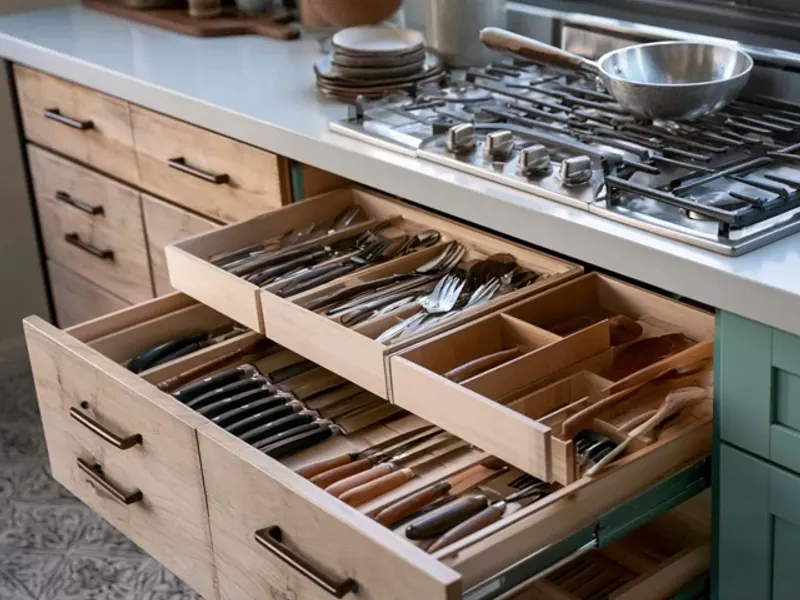
Kitchen Drawer Organizers: One Idea, Total Transformation
There’s a particular satisfaction in opening a camp kitchen drawer and seeing everything exactly where it belongs. No jumbled mess of spatulas and spice packets. No digging for the can opener while your eggs burn. It sounds small, but that one drawer—organized with purpose—can change how you feel about cooking at camp.

Why One Drawer Changes Everything
A camp kitchen drawer is the most-used surface in your setup. You open it dozens of times a day. When it’s chaotic, every meal feels like a scavenger hunt. When it’s organized, you move with ease. The trick isn’t buying more gear. It’s using what you have with intention. A simple set of dividers or small bins transforms that drawer from a black hole into a command center.
The One-Container Method
Instead of loose items, group everything into categories: utensils, spices, tools, and fire starters. Use one collapsible bin per category. I prefer soft-sided fabric bins because they conform to odd drawer shapes and don’t rattle. Measure your drawer depth first—most camp drawers are 3 to 4 inches deep. Bins that are too tall won’t close, and too short let things spill. Aim for bins that fill the drawer width with less than a half-inch of slack on each side. That snug fit keeps them from sliding when you drive.
What to Put Inside
Think about the sequence of cooking. You grab a knife, then a cutting board, then spices. Arrange your bins in that order: tools on the left, spices in the middle, small gadgets on the right. For spices, use a narrow bin with individual slots or a small jar caddy. I’ve repurposed a pill organizer for salt, pepper, and paprika—it takes up almost no space and keeps them dry. For utensils, choose a bin with divided sections so forks don’t tangle with tongs. A simple expandable bamboo drawer divider works beautifully if your drawer is wide enough.
The Common Mistake to Avoid
Don’t overfill. A packed drawer creates friction when opening and closing, and things shift during travel. Leave about 10% empty space. That gap lets you grab items without wrestling them out. Also, avoid storing anything sharp without a sheath. A loose paring knife can slice through a fabric bin and into your hand. Use a magnetic strip on the inside of the drawer lid or a small knife roll inside the bin.
Adapting for Weather and Terrain
Rain and humidity are the enemies of organized drawers. If you camp in damp climates, line the drawer with a silicone mat or waterproof shelf liner. It prevents moisture from wicking into wooden dividers and stops paper labels from peeling. In windy conditions, use heavier bins or add a small bungee cord across the drawer front to keep everything from flying out when you open it. For cold weather, keep a small hand warmer in the spice bin to prevent clumping—just wrap it in a cloth to avoid direct heat on plastic.
If you’re camping with kids, assign each child a small bin for their own cup, spoon, and napkin. They learn to find and return their items, and you avoid the “where’s my fork?” chorus. Label each bin with a permanent marker or a piece of tape. Kids can read pictures if they can’t read words yet.
Safety First: Secure the Drawer
Before you drive, lock the drawer if your setup has a latch. If not, use a tension rod or a bungee cord to keep it closed. A drawer that slides open on a bumpy road can spill its contents across the floor, creating a tripping hazard and a mess. Also, never store fuel canisters or lighters inside a camp kitchen drawer. Heat from direct sunlight or a nearby stove can be dangerous. Keep those in a separate, ventilated container away from the cooking area.
The One-Hour Transformation
You don’t need a full day or a big budget. Gather your drawer, measure it, and pick up a few fabric bins or an expandable divider. Empty the drawer completely. Wipe it clean. Sort every item into piles: keep, relocate, discard. Only put back what you use every single trip. That one hour of focused sorting will save you hours of frustration later. The first time you open that drawer and see order, you’ll wonder why you didn’t do it sooner.
Takeaway: A single organized kitchen drawer is the foundation of a calm, efficient camp kitchen. Start with one drawer, one method, and one hour. The rest of your camp will follow.
Frequently Asked Questions
What is the best way to organize a camp kitchen drawer?
Use adjustable drawer dividers or collapsible bins to create sections for utensils, spices, and small tools. Measure your drawer first, then choose dividers that fit snugly to prevent shifting during travel.
Can I use regular kitchen drawer organizers for camping?
Yes, but choose lightweight, durable materials like bamboo or plastic. Avoid glass or heavy metal. Look for expandable dividers or modular bins that can adapt to different drawer sizes.
How do I keep drawer organizers from sliding around in my camper or tent?
Line the drawer with a non-slip shelf liner or adhesive velcro strips. Secure dividers with tension rods or clips designed for RVs. For tent camping, use a dedicated tote with built-in compartments.
What should I store in a camp kitchen drawer organizer?
Store frequently used items: eating utensils, cooking spatulas, spices in small jars, a can opener, a lighter, and a paring knife. Keep heavier items low and lighter ones on top to prevent tipping.