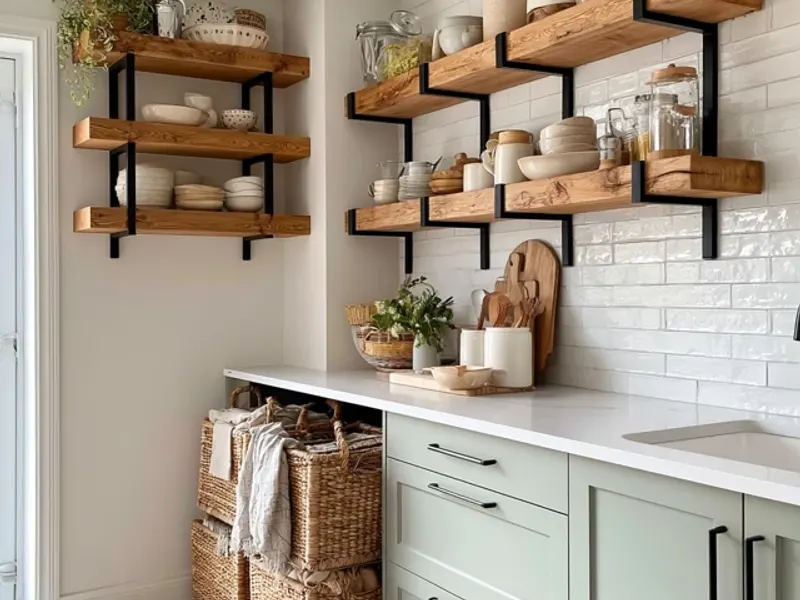
Kitchen Storage Shelves: The Designer Secret for Camping
There is a sound every seasoned tent camper knows: the soft clatter of a plastic bin tipping over at 2 a.m. Or the metallic groan of a folding table buckling under a heavy cooler. For years I fought with wobbly camp kitchens—stacking milk crates, balancing cutting boards on logs, and losing my headlamp in a jumble of bags. Then I stumbled onto a trick that changed everything. It is the secret to kitchen storage shelves designers won't tell you, and it is not sold in any camping aisle. It is a modular, tension-fit system that uses the tent itself as a frame.

Why Traditional Camp Kitchen Shelves Fail
Most campers reach for folding tables, wire racks, or collapsible cabinets. These work fine on level ground, but the moment you pitch on a slope, gravel, or pine needles, they wobble. Rain pools on the tabletop, wind catches the legs, and everything slides off. The real problem is that these shelves are designed for flat, hard surfaces—not for the flexible, textured world of a tent floor.
Designers rarely mention this because they sell products, not systems. But the fix is simple: stop trying to level the ground, and start using the tent's structure as your support. Your tent poles, guy line loops, and vestibule straps are already engineered to handle tension and weight. Why not use them for storage?
The Secret: Tension-Fit Modular Shelves
Here is the technique. You will need a set of lightweight, adjustable tension rods—the kind sold for shower curtains or closet organization. Choose rods that are 20 to 36 inches long, made of aluminum or sturdy plastic, with rubber end caps. Do not buy the cheapest set; the springs inside cheap rods wear out fast in humid or cold weather.
Next, find two opposing anchor points inside your tent. In a dome tent, this is often the two main crossing poles at the center peak. In a tunnel tent, use the vertical poles along the side walls. For a vestibule, use the pole arch and the tent wall seam. The key is that both anchor points must be rigid enough to resist inward compression—tent poles are perfect; fabric loops are not.
To install, compress the rod and position it between the two anchors. Let the spring tension hold it in place. Test the grip by gently pushing down on the center. If it slides, wrap a strip of grippy shelf liner around each end before placing the rod. This adds friction without damaging the tent fabric.
Building a Multi-Tier Shelf
A single rod is good for hanging lightweight items like a lantern or a mesh bag of spices. For real kitchen storage, you need a shelf surface. Place two parallel tension rods about 12 inches apart, then lay a thin, rigid board across them. I use a plastic grid panel—the kind sold for light diffusers in ceiling fixtures—cut to 12 by 18 inches. It weighs almost nothing, does not absorb moisture, and can be wiped clean. A bamboo cutting board or a piece of corrugated plastic works too.
Now you have a stable shelf that holds your stove, fuel canister, cook pot, and a small bin of utensils. The weight presses down on the rods, which press outward into the poles. The harder you load it, the tighter it grips. This is the physics that designers bank on—but they keep it quiet because it undercuts their expensive, branded shelving units.
Adapting for Rain, Wind, and Kids
In wet weather, moisture wicks along tent poles and can drip onto your shelf. Place a small, shallow baking tray or a silicone mat under the rod ends to catch drips. For high wind, add a third rod in the middle as a cross-brace to prevent side-to-side sway. If you camp with kids, keep the bottom shelf at waist height—high enough to be out of toddler reach, low enough for older children to grab their own cups and snacks.
Common Mistake to Avoid
Do not overload a single rod with heavy cast iron or a full water jug. The rod will bow, the spring will weaken, and the whole shelf can collapse. Distribute weight evenly across two or three rods. I keep heavy items like the stove and fuel on the lowest shelf, and lighter items like spices, cups, and dry food on upper shelves. This keeps the center of gravity low and the shelf stable.
Safety Note for Open Shelves Near a Stove
Never place a tension shelf directly above a lit camp stove. Heat rises and can melt plastic bins or ignite paper towels. Keep at least two feet of vertical clearance between your stove and any shelf above it. Always cook outside the tent or in a well-ventilated vestibule with the door open. Carbon monoxide is invisible and deadly—never use a stove or lantern inside a closed tent.
Takeaway
The secret to kitchen storage shelves designers won't tell you is that the best shelf system is the one you build from simple, non-camping items. Tension rods, a grid panel, and a bit of shelf liner give you a custom, stable, lightweight kitchen that works on any terrain. It is easy to set up, easy to pack, and costs a fraction of a branded camp cabinet. Next time you are organizing your tent, look at those poles differently. They are not just holding up the tent—they are holding up your dinner.
Frequently Asked Questions
What is the secret to kitchen storage shelves designers won't tell you?
The secret is using modular, tension-fit shelves that require no drilling or permanent attachment. They leverage the tent's own structure—poles, straps, or loops—to create stable, adjustable storage without adding weight or bulk to your pack.
Can I use tension rod shelves in a tent with uneven walls?
Yes, but you need to pair them with a flat support board or mesh panel. Tension rods alone may slip on sloped tent walls. I place a thin cutting board or plastic grid between the rod and the fabric to distribute pressure and keep everything steady.
What weight can a tension rod shelf hold in a tent?
A standard 1-inch diameter tension rod can hold 5-10 pounds if properly anchored between two sturdy poles. For heavier items like cast iron or a full water jug, use a two-rod system with a shelf board resting across them, and keep weight under 15 pounds total.
How do I keep food safe from animals with open shelves in camp?
Use sealed, hard-sided bins on the shelves for all food, and store the shelf unit inside a bear-proof locker or vehicle overnight. Never leave food or scented items on open shelves when you are away from camp.