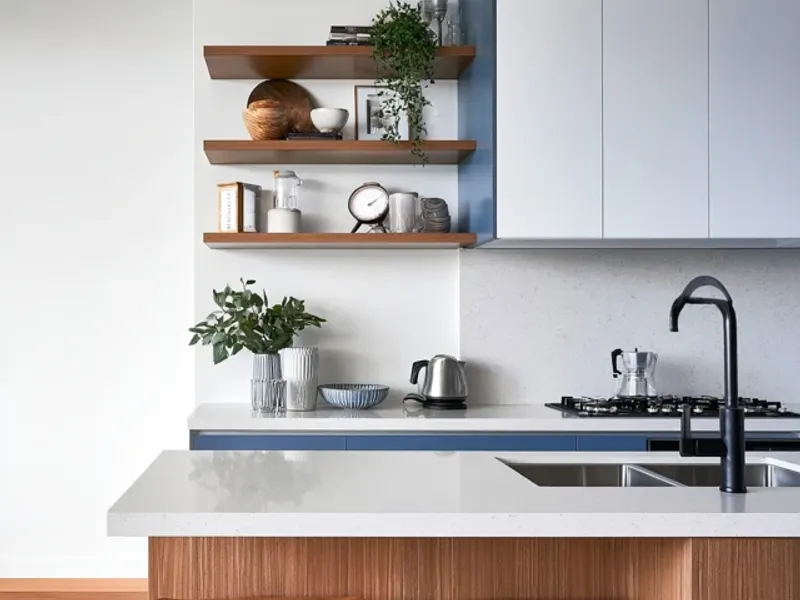
Small Apartment Kitchen Storage Everyone's Saving Right Now
There's a quiet satisfaction in opening a cabinet and seeing everything in its place. No shifting stacks of mismatched lids. No digging for the garlic powder. That feeling isn't just for tiny apartments with galley kitchens. It's the same calm I chase when I unzip a gear bin at camp and find the coffee press right on top.

The small apartment kitchen storage everyone's saving right now isn't about buying a whole new set of matching containers. It's about working with the space you have—whether that's a cramped countertop or the back of a hatchback. Let me walk you through the specific methods that actually hold up, plus how to adapt them for your camp kitchen.
Vertical Dividers That End the Pan Lid Puzzle
The single biggest space-waster in any small kitchen is the flat stack. Pans, cutting boards, baking sheets—they pile up, and every time you need the one at the bottom, you pull half the stack. The fix is simple: vertical dividers.
I use a tension-rod system inside a lower cabinet. Two tension rods placed front-to-back create slots for lids, cutting boards, and sheet pans. They stand upright, so I can slide one out without touching the others. For a camp kitchen, I do the same thing with a collapsible dish rack turned on its side inside a plastic tote. The vertical slots hold plates and pot lids securely during travel.
The common mistake is using dividers that are too short. Measure the full depth of your cabinet or bin, then buy rods or dividers that extend at least an inch beyond that. A snug fit keeps everything from wobbling on bumpy roads.
Stackable, Nesting, and Modular—In That Order
There's a hierarchy to small-space storage that applies whether you're in a studio apartment or a four-person tent. First, look for items that nest inside each other. Mixing bowls, measuring cups, and cookware sets that stack into one another save the most volume. Next, choose stackable items that sit level on top of each other without sliding. Last, consider modular pieces that can be rearranged for different trips or seasons.
For a permanent kitchen, I use a set of three nesting mixing bowls that double as serving bowls. They take up the space of one. In my camp kit, I carry a nesting cookset with a kettle that fits inside the largest pot. The lid doubles as a small frying pan. That's three pieces that pack into one footprint.
The trick most people miss is testing the nesting before you buy. Bring a measuring tape and check that the smaller piece sits fully inside the larger one without a gap that wastes space. A half-inch of wasted air around each item adds up fast.
Clear Containers With a Label System That Actually Works
Everyone talks about clear containers, but the real game-changer is the label system. I use a simple method: a white label maker for permanent items like flour and sugar, and a dry-erase marker for things that change—rice one week, oatmeal the next. The dry-erase wipes off with a damp cloth, so I can reuse the same containers without peeling sticky labels.
For the camp kitchen, I use lightweight, BPA-free plastic jars with screw lids. I label them with a piece of painter's tape and a permanent marker. The tape peels off cleanly when I repurpose the jar for a different trip. The key is keeping all labels on the same side of the container so you can see everything at a glance when the bin opens.
Avoid the mistake of buying containers that are too tall for your shelves. Measure the height of your cabinet or bin, then subtract an inch for clearance. Nothing frustrates more than a container that won't slide out because it's a quarter-inch too tall.
Magnetic Strips for the In-Between Stuff
Knives, spice tins, tweezers, small scissors—these items always seem to wander. A magnetic strip mounted on the wall or inside a cabinet door corrals them in one visible place. In a small apartment, I have one strip inside an upper cabinet for knives and another on the wall for spice tins. It frees up an entire drawer.
For camping, I use a flexible magnetic strip cut to fit inside the lid of my gear bin. It holds small knives, a can opener, and a mini lighter. The strip is lightweight and doesn't add bulk. When the bin is closed, everything stays put during transport.
The mistake is using magnets that are too weak. Test the strip with your heaviest item before installing. A magnetic strip that drops your favorite chef's knife is worse than no strip at all.
The Drawer Insert That Changes Everything
Deep drawers are a black hole. Things sink to the bottom and disappear. The solution is a modular drawer insert with adjustable dividers. I use one with movable wooden pegs that let me customize the width of each compartment. Cutlery goes in one section, measuring spoons in another, and small gadgets like a garlic press or zester in a third.
In the camp kitchen, I use a soft-sided tool roll with elastic loops. It rolls up tight and fits inside a tote. Each loop holds one utensil, so nothing rattles. The roll unrolls flat on the picnic table, and every tool is visible at once.
Don't buy a pre-set insert with fixed compartments. They never match your actual items. Look for adjustable systems, or make your own with small cardboard boxes cut to size and covered in contact paper.
Hanging Storage for the Dead Space
The inside of cabinet doors and the wall above the counter are often wasted. I hang a small wire basket on the inside of the pantry door for foil, plastic wrap, and bags. Another basket on the wall holds onions and garlic away from direct light. For the camp kitchen, a mesh hanging organizer with clear pockets attaches to the tent's center pole or a nearby tree. It holds spices, lighters, and headlamps off the ground and out of the way.
The key is weight. Don't overload hanging storage. A door-mounted basket full of heavy cans will sag or pull the hinge loose. In a tent, too much weight in a hanging organizer can pull the pole or damage the fabric. Keep it light—spices, snacks, small tools.
One more thing: always check local regulations about hanging food in bear country. Some areas require all food to be stored in a hard-sided container or bear canister. A mesh bag full of granola bars is not bear-proof.
Takeaway
The small apartment kitchen storage everyone's saving right now isn't a single product or a viral hack. It's a set of habits: measure before you buy, nest what you can, label what you can't, and use every inch of vertical space. These same habits make a camp kitchen feel twice as big. Start with one drawer or one gear bin. The calm you feel when everything has a home is worth the effort.
Frequently Asked Questions
What is the best way to store spices in a small apartment kitchen?
Use a magnetic strip on the wall or inside a cabinet door to hold small metal tins. This keeps spices visible and frees up drawer space. For camping, pack spices in a small, labeled pouch or a repurposed pill organizer.
How can I maximize cabinet space in a small kitchen?
Install shelf risers to double vertical space for plates and cups. Use stackable bins for dry goods. In a tent, use collapsible bins and hanging organizers to keep food and gear tidy without taking up floor space.
What are the best containers for organizing a small pantry?
Clear, airtight containers in uniform sizes stack neatly and let you see contents at a glance. Square or rectangular shapes waste less space than round ones. For camping, use lightweight, nesting containers that pack flat when empty.
How do I organize a small kitchen on a budget?
Repurpose items you already own: use mason jars for dry goods, shoe boxes for drawer dividers, and tension rods under sinks to hang spray bottles. For camp, use egg cartons for small snacks and a hanging shoe organizer for utensils.
Can small apartment kitchen storage ideas work for a camp kitchen?
Absolutely. The same principles—vertical storage, nesting items, clear containers—translate directly to a tent or car camping setup. Adapt with lightweight, portable versions of the same organizers.