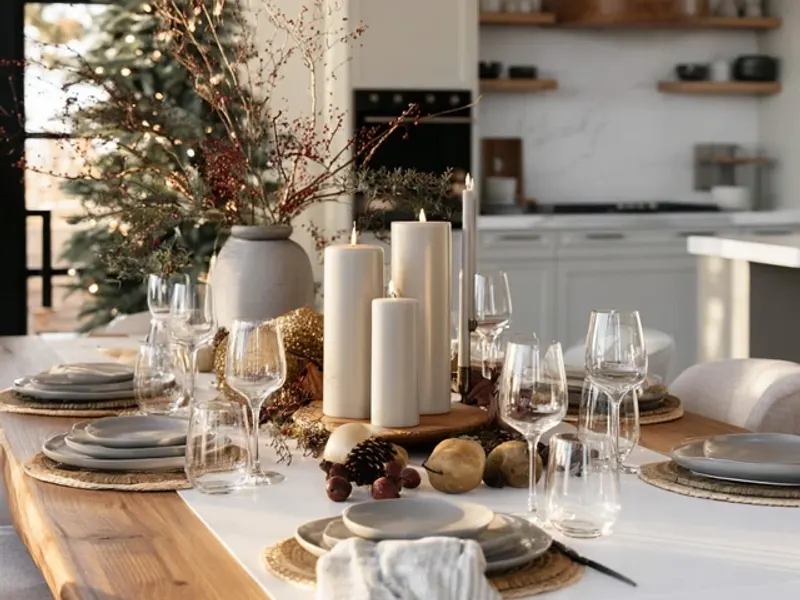
The Kitchen Table Centerpiece Mistake 9 Out of 10 People Make
You set up the camp kitchen table, spread out your gear, and then — almost without thinking — you place that big lantern right in the middle. Or maybe it’s a vase with wildflowers, a bulky spice rack, or a stack of plates you’re saving for dinner. It looks homey for a moment, but within ten minutes you’re reaching around it, knocking things over, and wondering why your prep space feels smaller than a postage stamp.

That’s the mistake nine out of ten people make: they treat the camp kitchen table like a dining room table. They put something decorative or unnecessary at the center, and it instantly kills the workflow. A camp table is a work surface first, a dining surface second. The centerpiece should serve the work, not the aesthetic.
What the Mistake Looks Like
The classic error is placing a large, non-functional item dead center. A tall lantern with a wide base. A bouquet of pine branches in a mason jar. A cutting board you aren’t using yet. That center spot is prime real estate — it’s the easiest place to reach from any side of the table. When you fill it with something that doesn’t help you cook or eat, you create a bottleneck.
I see this most often with new campers who want their site to feel like home. They bring a tablecloth, a centerpiece, and matching dishware. It looks lovely in the photo, but when the wind picks up or you need to chop vegetables, that centerpiece becomes an obstacle. You end up working around it, which slows you down and increases the chance of spills or dropped gear.
The Fix: One Functional Item, Off-Center
Keep exactly one item on the table, and make it earn its spot. A small, stable LED lantern placed off to one side — not dead center — so it lights the work area without blocking it. A compact paper towel holder that you actually use. A small cutting board you are currently using. That’s it.
If you need a light source, choose one that doesn’t take up horizontal space. A headlamp worn while cooking, or a lantern hung from a ridge line above the table, frees the entire surface. If you must set a lantern on the table, pick one with a narrow base — no wider than your palm — and set it at the far left or right edge. This keeps the middle open for chopping, mixing, and plating.
For families, the temptation is to put the ketchup, mustard, and salt shaker in the center so everyone can reach them. That works for five minutes, then someone knocks one over. Instead, use a small, lidded caddy that lives at one corner of the table, or keep condiments in a mesh bag hung from the table edge. The middle stays clear for the real work: getting dinner on the table.
How to Adapt for Wind, Rain, and Kids
Wind is the great enemy of the camp centerpiece. A tall vase or a lightweight lantern will tip, spill, or roll off the table. If you must have a lantern on the table, use one with a rubberized base or a wide, low profile. Better yet, hang it. A simple carabiner and a loop of paracord from your tarp ridge line keeps the light where you need it and the table clear.
Rain changes the game. A wet table surface is slippery, and any centerpiece becomes a hazard. Keep the table as bare as possible. Use a waterproof tablecloth with grippy edges so plates and utensils don’t slide. Store everything except the current meal in a dry bin under the table. The only thing on the table should be what you are using right now.
With kids, the centerpiece mistake multiplies. A child reaching for a cup can easily knock over a lantern or a jar of flowers. Keep the table low-risk: no glass, no tall objects, nothing that can spill hot liquid. A small, battery-powered lantern with a shatterproof lens is safe and functional. Teach kids that the middle of the table is for food prep, not decorations.
What Belongs on the Table (and What Doesn’t)
Here is a quick checklist I run through every time I set up the camp kitchen table:
- Belongs: The cutting board you are using right now, the knife in your hand, the pan you are cooking with, one small light source off to the side, a paper towel roll if you are actively wiping up.
- Does not belong: Extra plates, spare utensils, a spice rack, a vase, a decorative tablecloth, a stack of napkins, a cooler (keep it on the ground or a separate table), a camp stove (put it on a separate surface or on the ground on a heat-safe mat).
The rule is simple: if you aren’t touching it in the next five minutes, it doesn’t need to be on the table. Store it in a tote, a hanging organizer, or a mesh bag under the table. This keeps the surface clear, the workflow smooth, and the meal stress-free.
One Specific Trick That Changed My Camp Kitchen
Here is the angle you won’t find on ten other sites: use a small, lidded wooden box — about the size of a shoebox — as your only tabletop organizer. Put your salt, pepper, oil, and a small knife in it. Set it at the far left corner of the table. The lid keeps everything contained and protected from wind and rain. When you need something, open the box, grab it, close the lid. The rest of the table stays empty and ready for action. It’s a single, purposeful item that replaces a cluttered centerpiece and keeps the workflow tight.
You don’t need a beautiful centerpiece to make your camp kitchen feel inviting. What makes it inviting is a clean, organized space where you can cook without frustration. Save the decorations for the tent — the table is for work.
Takeaway
Next time you set up your camp kitchen table, pause before you put anything in the middle. Ask yourself: does this help me cook or eat right now? If the answer is no, leave it in the tote. One functional item, off-center, is all you need. Your prep space will thank you, and dinner will come together faster.
Frequently Asked Questions
What is the most common camp table centerpiece mistake?
Putting a bulky, decorative item (like a large vase, flower arrangement, or oversized lantern) in the middle of the table. This steals precious prep space, blocks access to gear, and creates a tripping hazard.
What should I use as a centerpiece on my camp kitchen table?
A single, stable, hands-free light source — like a small LED lantern or a headlamp hung overhead. It serves a purpose, doesn't take up prep space, and keeps the table clear for cooking and eating.
How do I keep the camp table clear when cooking for a family?
Use a dedicated utility table or a folding side table for gear like the stove, cutting board, and condiments. Keep only what you are actively using on the main table, and stash everything else in a tote or bin under the table.