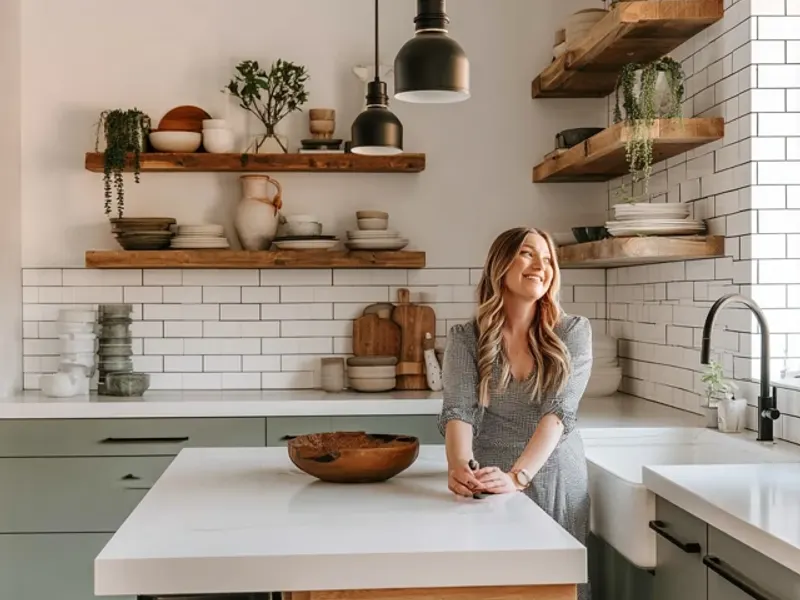
Why Your Open Shelf Styling Feels Off (And the Fast Fix)
The first time I pulled up to a camp kitchen shelf, I thought I had it figured out. Plates stacked here, a few jars there, some mugs dangling from hooks. But when I stood back, something felt off. Not messy, exactly. Just… not right. The kind of off where you can’t pinpoint the problem, so you keep shuffling things around, hoping it clicks.

It doesn’t click. Not until you see the one mistake that ruins every open shelf styling attempt.
The One Mistake That Throws Everything Off
It’s not the number of items. It’s not the color of the shelf. It’s visual noise — specifically, the noise created by too many different container shapes, sizes, and materials in one line of sight. When you have a round bag of coffee, a square box of tea, a tall bottle of oil, and a short squat jar of salt all sitting together, your eye jumps from one to the next without landing anywhere. The shelf feels busy, even if every item is perfectly clean.
The fix is deceptively simple: create repetition. Repetition is the visual glue that makes a group of objects feel intentional. In a camp kitchen, that means choosing one type of container for your dry goods and sticking with it.
The Fast Fix: Uniform Containers on the Front Row
I use clear, wide-mouth plastic jars with screw lids — the kind meant for pantry storage. They’re lightweight, shatterproof, and let me see what’s inside without opening. For a camp shelf, I buy a set of six identical jars. Then I transfer every loose item — rice, pasta, sugar, coffee, tea bags, trail mix — into those jars. Suddenly, the shelf has a rhythm. Six jars, all the same height, same material, same lid. The eye relaxes.
But you don’t have to buy new jars. You can use any matching set: all glass mason jars, all tin canisters, all recycled pasta sauce jars with the labels soaked off. The key is matching. Even two or three identical containers grouped together will anchor the whole shelf.
Where to Start
- Pick your most-used shelf. Usually the one at eye level. That’s where the repetition will have the biggest impact.
- Group by height. Place taller containers in the back, shorter ones in the front. This creates a staircase effect that feels orderly.
- Limit to three container types. On one shelf, I might have jars, a stack of plates, and a single cutting board. That’s it. More than three types of objects and the noise creeps back.
What About the Stuff That Can’t Fit in a Jar?
Some items resist the jar treatment. A bag of chips. A half-used box of crackers. A roll of paper towels. These are the items that most often make a shelf feel off, because they come in crinkly, floppy, mismatched packaging.
My trick is to give those items a designated spot that is out of the main sight line. I use a small canvas bin or a shallow wooden crate on the bottom shelf. Everything that can’t go in a jar goes in that bin. The bin itself becomes a single visual unit. From two feet away, you don’t see the chip bag; you see a neat rectangular box.
If you have kids, this bin is also where the snack bags live. They can rummage without messing up the styled shelf above. It’s a practical compromise that keeps the aesthetic intact.
The Rule of Threes for Open Shelf Decor
Once the containers are uniform, you can add one or two decorative touches. But only if they follow the rule of threes: group items in odd numbers, and keep the group small. A single small plant in a terra-cotta pot. A trio of wooden spoons in a plain cup. A stack of two enamel plates. That’s enough.
I never put more than three decorative items on an open shelf. More than that, and the shelf starts to look like a souvenir table. Less than that, and it looks bare. Three is the sweet spot.
Adapting for Weather and Wildlife
Open shelves in a camp kitchen come with real-world constraints. If you’re camping where rain is likely, use containers with tight lids — plastic jars with rubber gaskets work well. In windy sites, avoid tall, top-heavy jars that can tip. In bear country, never leave food on open shelves overnight. Transfer all containers into a locked bear locker or hard-sided cooler before bed. The uniform jar system makes that transfer fast: just grab the whole jar and go.
The 10-Second Shelf Reset
Even with the best system, a shelf can drift. A jar gets moved. A bag gets shoved in. The fix is a 10-second scan: stand two feet back, look at the shelf, and spot anything that breaks the repetition. A stray granola bar wrapper. A water bottle that doesn’t belong. Remove it. That’s it. The shelf resets.
Takeaway
Open shelf styling in a camp kitchen feels off not because you have too much stuff, but because your stuff lacks visual rhythm. The fast fix is repetition: one container style, one row of matching jars, one bin for outliers. Once the noise quiets, the shelf works. It looks intentional. It feels calm. And you can find the salt without shuffling three bags and a box of crackers.
Frequently Asked Questions
Why does my open shelf camp kitchen look messy no matter how I arrange it?
The most common reason is visual clutter from too many different container sizes, shapes, and colors. When every item competes for attention, the eye has no place to rest. The fast fix is to group similar items together and use containers with a consistent look, like all glass jars or all white bins.
How do I prevent food from attracting wildlife while keeping open shelves?
Store all food items in airtight containers, such as screw-top jars or locking plastic bins. Keep the most aromatic foods (like bacon or spices) in a sealed cooler or bear canister at night. Open shelves should only hold non-perishable, sealed goods during the day. Always follow local regulations for food storage.
What is the one item that always ruins the look of my camp shelf?
A crumpled bag of chips or a half-open box of crackers. The bag’s wrinkled foil and uneven shape scream clutter. Transfer chips into a clear cylinder jar and crackers into a flat rectangular container. The visual payoff is instant.