
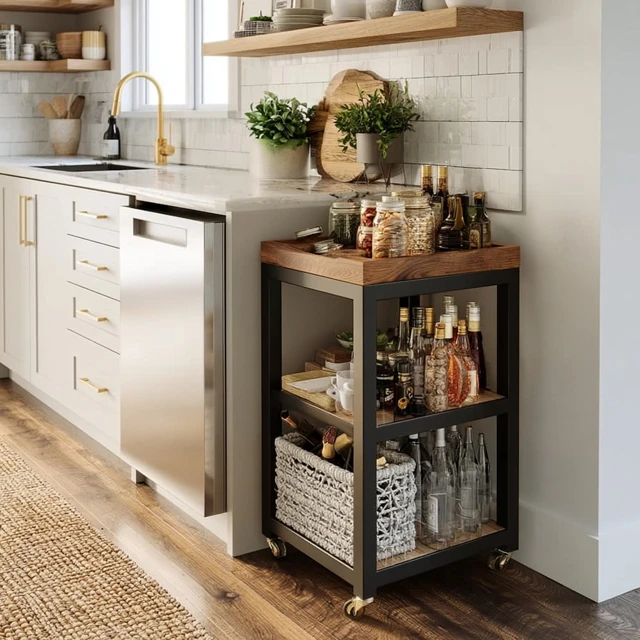
The first time I tried to cook dinner in a small tent campsite, I felt like I was playing a game of gear Jenga. The stove sat on a wobbly cooler. The cutting board balanced on a camp chair. Spoons rolled into the dirt. That night, I realized something: the problem wasn’t the small space. It was that I had no dedicated surface. That’s when I turned to a kitchen cart. And honestly, it changed everything.

Why a Kitchen Cart Works for Small Tent Camping
A kitchen cart gives you vertical storage without the footprint of a table. Most carts are about 24 inches wide and 18 inches deep—smaller than a standard camp table. But they offer two or three shelves. That means you can store your stove, prep area, and supplies all in one spot. I use a cart with locking wheels so it stays put on uneven ground. The trick? Choose one with a weight capacity of at least 50 pounds. Anything less and it will wobble under a full water jug.
The Exact Setup I Use
I start by placing the cart on the most level patch of ground I can find. If the site is sloped, I carry a few flat stones or small wood blocks to shim under the wheels. Lock the wheels first. Then I set up in layers. On the top shelf, I put the camp stove and a small cutting board that overhangs just an inch or two. The middle shelf holds a plastic tote with cooking utensils, spices in small jars, oil, and a spatula. The bottom shelf is for heavier items: a 5-gallon water jug or a cast iron skillet. I never put food that attracts animals on the cart overnight. That goes in a sealed bear canister or cooler away from the tent.
One Trick You Won’t Find on Other Sites
Here’s the specific angle I learned after a rainy trip. Most people set up their cart and leave it. But in a small space, that cart becomes a wind sail if you’re not careful. My trick: use two bungee cords to secure the cart to a nearby tree or to a stake driven into the ground. I run one cord from the cart handle to the tree at about waist height, and another from the lower frame to a tent stake. This keeps the cart from tipping when a gust hits. I also wrap a small LED lantern around the cart handle at night so I don’t trip over it. This setup takes two minutes and has saved me from spilled dinners more times than I can count.
Organizing for Rain and Wind
Rain changes everything. I keep a lightweight tarp (about 5×7 feet) in my cart’s bottom shelf. When clouds roll in, I drape the tarp over the cart and secure it with clothespins or small binder clips. This creates a dry cooking zone underneath. I angle the tarp so water runs off away from the stove. For wind, I position the cart with its back to the breeze. The stove’s flame stays steady, and my prep area doesn’t become a dust storm. Common mistake? Leaving the cart open in a drizzle. That soaks your spice jars and makes the stove rust. Always cover it if rain is forecast.
Cooking with Kids Around
If you’re camping with children, the cart doubles as a safety barrier. I place it between the cooking area and the tent entrance. Kids naturally stay on the other side. I also keep a small bin on the middle shelf with snacks and cups so they can grab what they need without reaching near the stove. The cart’s height means hot surfaces are above little hands. Just make sure the cart is stable—test it by giving a gentle push before lighting the stove.
What to Leave Off the Cart
Not everything belongs on a kitchen cart. I never store propane canisters on the top shelf where they could get hot. Those go in a separate mesh bag on the ground, shaded from direct sun. I also skip glass jars—they break too easily. Instead, I use lightweight plastic or silicone containers. And I never hang a lantern directly above the stove. Heat rises, and that plastic can melt. Clip the lantern to the cart handle at the side instead.
The Takeaway
A kitchen cart isn’t just for big campsites. In a small space, it’s the difference between chaos and control. You get a stable cooking surface, organized storage, and a cleaner campsite. Start with a cart that has locking wheels and a sturdy frame. Set it up on level ground. Bungee it down. Cover it when rain comes. And keep your food sealed and away from wildlife at night. That cart will earn its spot trip after trip.
Frequently Asked Questions
Can a kitchen cart really work in a small tent campsite?
Yes, a kitchen cart works well even in tight spaces. I use one that’s 24 inches wide and 18 inches deep. It keeps everything off the ground and organized without taking up much room. The key is choosing a cart with shelves and locking wheels so it stays stable.
How do I keep a kitchen cart stable on uneven ground?
I always position the cart on the most level spot I can find, then use small flat stones or wood shims under the wheels to level it. Locking wheels are essential. For windy conditions, I bungee the cart to a nearby tree or stake it down using the frame.
What should I store on a camping kitchen cart?
I keep the top shelf for a two-burner camp stove and a cutting board. The middle shelf holds cooking utensils, spices, and oil in a small tote. The bottom shelf is for heavier items like a water jug or cast iron pan. I avoid storing food that attracts wildlife—keep that in a sealed bin away from the cart at night.
Is a kitchen cart safe for cooking near a tent?
Only if you follow safety rules. I place the cart at least 10 feet from the tent entrance and never cook inside the tent. The cart must be on a non-flammable surface like gravel or dirt, not dry grass. I also keep a small fire extinguisher nearby and never leave the stove unattended.